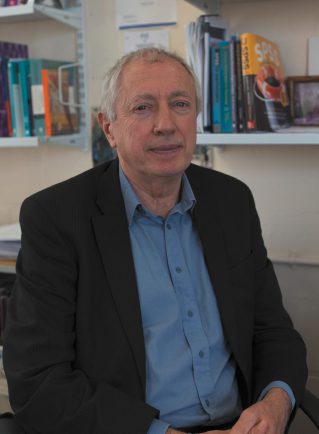
A STUDY into men’s mental health by a University of Worcester psychologist is set to feature in an Australian documentary.
Dr Peter Forster, whose study ‘Insights Into Men’s Suicide’ has been picked up by Australia’s ABC channel, said men in Australia and the UK are four times more likely to die by suicide than women.
They are also less likely to seek help, do not know where to find it and tend to see avenues like counselling as not for them.
Written alongside Australian colleague Suicide Prevention Consultant, Susan Beaton in 2012, the study also revealed that the suicide rate for Aboriginal men was four times higher than all other Australians due to issues like marginalisation.
The three-part documentary looking at men’s mental health and suicide prevention will be broadcast later this year.
Dr Forster said: “I’m pleased to have contributed to the programme. Suicide does not just affect one or two people’s lives, it ripples out and affects the whole community, it’s a tragic thing.”
The paper brings together a number of different pieces of research identifying risk factors in men’s suicide whilst looking at effective treatments.
It found pressures on men include mental health issues, such as depression or anxiety, financial difficulties, job pressures, working in an isolated setting and relationship breakdown.
Dr Forster added: “Men tend to keep problems to themselves and use alcohol as a way of coping when they are down or distressed, which can make them act impulsively.
“They tend to have smaller networks and rely on partners or wives for their social life. Women tend to have a wider network of female friends. So when their relationship breaks down they tend to lose their support system and end up feeling more isolated.
“We do know men respond to treatment just as well as women – if we can get men into counselling, psychological therapy or going to the doctor.
“The key thing is to get them into the system.”